Table of Contents
Cricket history between the two sides reflects a journey of evolving strategies, shifting dominance, and unforgettable performances across formats. From early encounters dominated by pace and aggression to later matches shaped by spin, patience, and tactical depth, the rivalry has grown into a compelling contest watched closely by fans worldwide. Each era brought new heroes, defining innings, and game changing spells that influenced outcomes and team confidence. Over time, conditions, playing styles, and modern cricket innovations have added further complexity, making every meeting unpredictable. This long standing competitive edge has produced iconic moments that continue to be discussed in cricket analysis and fan conversations.
Latest Matches Summary
| Match Date | Match Format | Venue Location | First Team Score | Second Team Score | Match Winner Name | Margin Of Victory |
|---|---|---|---|---|---|---|
| 16 February 2026 | T20 International | Pallekele Sri Lanka | Australia 181 | Sri Lanka 184/2 | Sri Lanka | 8 wickets |
| 14 February 2025 | One Day International | Colombo Sri Lanka | Sri Lanka 281/4 | Australia 107 | Sri Lanka | 174 runs |
| 12 February 2025 | One Day International | Colombo Sri Lanka | Sri Lanka 214 | Australia 165 | Sri Lanka | 49 runs |
| 06 February 2025 | Test Match Format | Galle Sri Lanka | Sri Lanka 257 and 231 | Australia 414 and 75/1 | Australia | 9 wickets |
| 29 January 2025 | Test Match Format | Galle Sri Lanka | Australia 654/6d | Sri Lanka 165 and 247 | Australia | Innings and 242 runs |
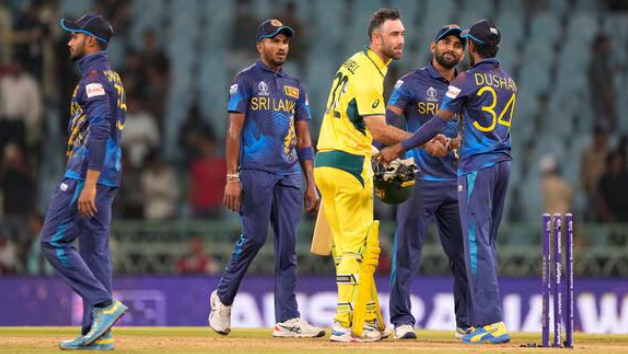
| 16 October 2023 | One Day International | Lucknow India | Sri Lanka 209 | Australia 215/5 | Australia | 5 wickets |
| 25 October 2022 | T20 International | Perth Australia | Sri Lanka 157/6 | Australia 158/3 | Australia | 7 wickets |
Head-to-Head Summary Table
| Match Cricket Format | Total Matches Played | Australia Wins Count | Sri Lanka Wins Count | Tied Matches Count | No Result Matches | Australia Win Percentage |
|---|---|---|---|---|---|---|
| Test Matches Overall | 35 | 22 | 5 | 0 | 8 | 62.85 |
| One Day Internationals | 108 | 64 | 40 | 0 | 4 | 59.25 |
| T20 Internationals Only | 27 | 15 | 12 | 0 | 0 | 55.55 |
| Matches In Australia | 54 | 38 | 13 | 0 | 3 | 70.37 |
| Matches In Sri Lanka | 71 | 35 | 30 | 0 | 6 | 49.29 |
| Neutral Venue Matches | 45 | 28 | 14 | 0 | 3 | 62.22 |
| ICC Tournament Matches | 22 | 14 | 8 | 0 | 0 | 63.63 |
Best Player Analysis Table
| Cricket Player Name | Country Represented | Primary Skill Type | Matches Played Count | Best Performance Stats | Career Strike Rate | Performance Impact Factor |
|---|---|---|---|---|---|---|
| Kumar Sangakkara | Sri Lanka | Wicketkeeper Batter | 76 | 134 runs in ODI | 78.86 | High Anchor Batter |
| Shane Warne | Australia | Right Arm Legspinner | 21 | 7 wickets for 94 | 45.30 | Elite Match Winner |
| Muttiah Muralitharan | Sri Lanka | Right Arm Offspinner | 36 | 8 wickets for 59 | 51.20 | Primary Wicket Taker |
| Mahela Jayawardene | Sri Lanka | Top Order Batter | 82 | 167 runs in Test | 74.50 | Tactical Middle Order |
| Steve Smith | Australia | Right Hand Batter | 34 | 142 runs in Test | 68.20 | Heavy Runs Accumulator |
| Glenn Maxwell | Australia | Batting All Rounder | 28 | 145 runs in T20 | 151.40 | Power Hitter Finisher |
| Chaminda Vaas | Sri Lanka | Left Arm Fast Medium | 44 | 5 wickets for 14 | 48.90 | Early Innings Strike |
Top Run Scorers All-Time
| Cricket Batter Name | Country Team Name | Total Runs Scored | Matches Innings Count | Highest Individual Score | Career Batting Average | Total Centuries Scored |
|---|---|---|---|---|---|---|
| Kumar Sangakkara | Sri Lanka | 3371 | 82 | 134 | 44.35 | 6 |
| Mahela Jayawardene | Sri Lanka | 2884 | 87 | 167 | 36.50 | 4 |
| Sanath Jayasuriya | Sri Lanka | 2445 | 79 | 134 | 34.43 | 5 |
| Ricky Ponting | Australia | 2342 | 56 | 140 | 48.79 | 7 |
| Michael Clarke | Australia | 1874 | 42 | 145 | 50.64 | 5 |
| David Warner | Australia | 1765 | 45 | 163 | 42.02 | 4 |
| Aravinda de Silva | Sri Lanka | 1658 | 48 | 167 | 39.47 | 3 |
Early Encounters That Set the Tone
The first meetings between the two sides established a clear contrast in style and approach. One team relied heavily on fast bowling, aggressive field settings, and deep batting strength, while the other leaned on patience, spin control, and calculated shot selection. In those early years, matches often felt one sided, especially when played in bouncy conditions that favored pace. However, even in difficult situations, the Sri Lankan side showed flashes of resistance through disciplined batting and clever use of spin in limited overs formats. These early games were not just about results but about learning curves. The experience gained during these encounters helped shape future strategies on both sides. Over time, these contests began to build a foundation for a competitive rivalry that would grow in intensity across formats and tournaments.
| Matches | Format | Early Winner Trend | Key Strength | Match Style |
| 1990s ODIs | ODI | Australia dominant | Pace attack | Aggressive |
| Early Tests | Test | Australia dominant | Fast bowling | One sided |
| Asian venues | ODI | Mixed results | Spin impact | Balanced |
| Neutral venues | ODI | Australia slight edge | Batting depth | Competitive |
Rise of Sri Lanka as a Competitive Force
As international cricket evolved, Sri Lanka gradually transformed from underdogs into a highly competitive unit capable of challenging top-ranked teams. Their improvement was driven by a strong spin department and technically sound batting lineup. Playing at home gave them a significant advantage, especially on slow pitches where spin dominated proceedings. Several series during this phase saw them pushing stronger opponents to the limit, creating pressure situations that exposed weaknesses in aggressive batting approaches. The team’s confidence grew with each strong performance, and they began to believe they could win consistently against any opposition. This shift also changed the way opponents prepared for matches, as Sri Lanka was no longer seen as an easy fixture. Their tactical discipline and ability to adapt made them a serious force in world cricket.
| Phase | Strength Area | Key Advantage | Conditions Used | Impact Level |
| Early growth | Spin bowling | Home control | Slow pitches | High |
| Middle phase | Batting stability | Anchors | Subcontinent | Strong |
| ODI rise | Fielding | Pressure building | Day matches | Moderate |
| Tournament play | Strategy | Match control | Neutral | High |
Period of Dominance and Control
During a long stretch of international cricket, the Australian side maintained strong control over most encounters. Their dominance was built on a fearless batting approach combined with one of the most effective pace attacks in the game. The ability to consistently post or chase high totals placed immense pressure on opponents. Even when conditions were challenging, their adaptability stood out, especially in fast-paced formats. Many matches during this period were decided within the first few sessions due to early breakthroughs with the ball. The psychological edge also played a major role, as opponents often entered matches expecting intense pressure. However, this dominance was not just about skill but also about execution under pressure, with key players consistently performing in crucial moments.
| Aspect | Strength | Match Influence | Key Factor | Outcome Pattern |
| Batting | Explosive starts | High pressure | Top order power | Big totals |
| Bowling | Fast attack | Early wickets | Swing pace | Collapse impact |
| Fielding | Athletic unit | Run saving | Direct hits | Pressure build |
| Strategy | Aggressive plans | Control game | Captaincy | Dominant wins |
Turning Point Matches That Shifted Momentum
Over time, several matches began to challenge the earlier dominance and shift momentum in unexpected directions. These encounters were marked by standout individual performances and tactical brilliance from the Sri Lankan side. Spin bowling played a crucial role in restricting scoring rates and breaking partnerships at key moments. In response, the Australian side had to rethink their approach, especially in slower conditions where timing and patience became more important than raw power. Some matches ended in narrow finishes, adding emotional intensity and changing how fans viewed the rivalry. These turning points were not just victories but statements that the balance of power could be challenged under the right conditions.
| Match Type | Key Performer Type | Turning Factor | Result Style | Impact |
| ODI thriller | Spin bowlers | Middle overs control | Close finish | High |
| Test match | Batting resilience | Long partnerships | Draw or win | Strong |
| T20 clash | All rounders | Death overs | Last over finish | Critical |
| Series game | Captain tactics | Field changes | Narrow margin | Major |
World Stage Tournament Clashes
When both teams met in global tournaments, the intensity increased significantly. These matches carried enormous pressure, as qualification and knockout stakes often hung in the balance. One side relied on aggressive starts and fast scoring, while the other focused on building innings and controlling middle overs. These contrasting styles produced some of the most memorable matches in cricket history. Fielding standards, decision making under pressure, and execution in death overs often determined the outcome. In several instances, matches swung dramatically within a few overs, leaving fans on edge until the final ball. These encounters became defining moments in ICC events and are still discussed for their tactical depth and emotional drama.
| Tournament | Stage | Pressure Level | Key Skill | Result Trend |
| World Cup | Group stage | High | Batting depth | Competitive |
| World Cup | Knockout | Very high | Bowling control | Tight games |
| Champions event | Semi final | Extreme | Fielding | Close finishes |
| League stage | Round robin | Medium | Strategy | Balanced |
Legendary Player Battles Within Matches
Individual battles between star players often shaped the outcome of key encounters. Fast bowlers tested top order batsmen with pace and bounce, while spin bowlers targeted technical weaknesses in subcontinental conditions. Some batters responded with aggressive counterattacks, shifting momentum within a few overs. These duels were not just statistical highlights but emotional turning points that influenced entire matches. Wicketkeepers and middle order players also played crucial roles by stabilizing innings under pressure. These contests between individuals added depth to the rivalry and created moments that fans still remember for their intensity and skill level.
| Duel Type | Players Involved | Skill Clash | Match Impact | Outcome Pattern |
| Pace vs bat | Fast bowlers vs openers | Speed handling | Early wickets | High impact |
| Spin vs middle order | Spinners vs anchors | Control vs patience | Mid innings shift | Game changing |
| Death overs | Bowlers vs finishers | Accuracy pressure | Final overs | Decisive |
| Field duels | Fielders vs runners | Agility | Run saving | Moderate |
Modern Era Balanced Competition
In recent years, matches between these sides have become far more balanced and competitive. The gap that once existed has narrowed due to improvements in training, analytics, and player development systems. Teams now rely heavily on data-driven strategies, match simulations, and specialized coaching to prepare for different conditions. This has resulted in closer scorecards and more unpredictable outcomes. Young players from both sides have brought fresh energy, making matches more dynamic and less predictable. T20 cricket has also influenced approaches, encouraging faster scoring and innovative bowling tactics. As a result, modern encounters are often decided in the final overs, adding excitement and unpredictability to the rivalry.
| Era | Playing Style | Key Change | Match Result Pattern | Influence Factor |
| Early modern | Aggressive batting | Power hitting | High scoring | T20 impact |
| Middle modern | Balanced approach | Strategy focus | Close games | Analytics |
| Recent years | Flexible tactics | Role specialization | Unpredictable | Data driven |
| Current phase | Fast adaptation | Multi format skill | Tight finishes | Fitness |
Conclusion
The rivalry stands as a reflection of how international cricket evolves with time, adapting to conditions, talent pools, and tactical thinking. What began as one sided contests gradually transformed into balanced and highly competitive encounters. Both teams contributed memorable performances that shaped cricket history, whether through dominant victories or closely fought battles. Changing generations of players ensured that the intensity never faded, keeping fans engaged across formats and eras. Today, this matchup represents not just competition but respect built over decades of shared cricketing excellence and unforgettable moments on the global stage.
FAQs
1.What makes this rivalry historically significant in cricket
It represents the evolution of contrasting cricketing styles, with pace dominance meeting spin mastery over decades, creating memorable contests across formats.
2.Which team dominated the early phase of encounters
The early phase was largely controlled by the fast bowling strength and aggressive batting depth of the Australian side.
3.How did Sri Lanka become competitive over time
Improved spin bowling, disciplined batting, and strong performances in home conditions helped them challenge stronger opponents consistently.
4.What role do conditions play in match outcomes
Pitch conditions heavily influence results, with fast surfaces favoring pace attacks and slow pitches supporting spin dominance and longer innings.
5.Why are modern matches more balanced
Better training systems, analytics, fitness standards, and T20 influenced strategies have reduced gaps, making matches more unpredictable and competitive.
| Read Also: Mumbai Indians Vs Punjab Kings Stats |