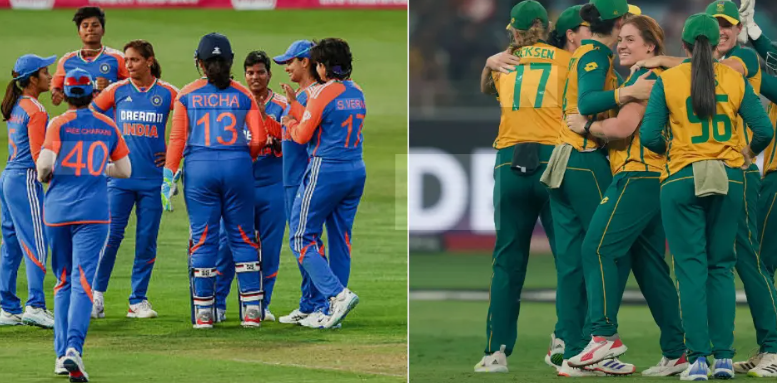
The rivalry between these two women’s cricket teams has grown into one of the most competitive and closely followed matchups in modern cricket. What started as uneven early encounters slowly transformed into a balanced contest filled with intensity, tactical battles, and unforgettable performances. Each meeting has brought new pressure situations where batting depth, bowling discipline, and fielding excellence have played a decisive role. Over time, both sides have produced match-winning stars who have shaped outcomes in crucial moments. The overall journey reflects evolution, resilience, and rising standards in women’s cricket, making every clash a highly anticipated showdown for fans worldwide.
Latest Matches Table
Date
Format
Venue
Winner
Margin
India Score
South Africa Score
27 April 2026
T20I
Benoni
South Africa
23 runs
132/8
155/6
25 April 2026
T20I
Johannesburg
India
14 runs
185/5
171/9
22 April 2026
T20I
Johannesburg
South Africa
9 wickets
192/4
193/1
19 April 2026
T20I
Durban
South Africa
8 wickets
147
148/2
17 April 2026
T20I
Durban
South Africa
6 wickets
157/7
158/4
2 November 2025
ODI
Navi Mumbai
India
52 runs
298/7
246
Team Statistics Summary Table
Format
Total Matches
India Wins
South Africa Wins
No Result / Draws
India Avg Runs
South Africa Avg Runs
Test Matches
3
2
0
1
420.5
315.2
One Day Internationals
35
22
12
1
210.4
204.4
Twenty20 Internationals
21
8
12
1
141.2
144.6
Overall Combined
59
32
24
3
257.3
221.4
World Cup Matches
6
4
2
0
238.1
224.7
Home Matches (India)
26
16
9
1
220.6
198.3
Individual Batting Records Table
Player Name
Team
Total Matches
Innings Played
Total Runs
Highest Score
Batting Average
Laura Wolvaardt
South Africa
38
37
1197
135
59.9
Smriti Mandhana
India
32
31
1037
149
61.0
Harmanpreet Kaur
India
41
39
735
103
33.4
Shafali Verma
India
24
24
634
205
35.2
Sune Luus
South Africa
35
32
592
93
28.1
Lizelle Lee
South Africa
18
18
588
132
98.0
Individual Bowling Records Table
Player Name
Team
Total Matches
Overs Bowled
Total Wickets
Best Bowling
Bowling Average
Deepti Sharma
India
39
242.4
33
5/52
24.3
Nonkululeko Mlaba
South Africa
23
114.2
26
4/22
22.1
Ayabonga Khaka
South Africa
28
198.5
22
4/31
29.5
Sneh Rana
India
12
92.1
20
10/188
21.8
Jhulan Goswami
India
19
158.3
20
4/24
18.1
Shabnim Ismail
South Africa
21
165.4
18
4/30
25.9
Early Encounters in International Women’s Cricket Rivalry
The early phase of contests between these two teams showed a clear contrast in playing style and approach. One side relied heavily on disciplined bowling and structured batting, while the other leaned on raw pace and aggressive top-order intent. In the initial matches, low scoring games were common, and bowlers often dominated proceedings. The early phase can be described as a “testing ground era” where both sides were trying to understand each other’s strengths. The batters struggled to convert starts into big innings, and the bowlers consistently kept the pressure on with tight lines. Fielding errors occasionally shifted momentum, but overall control stayed with bowling units. These matches set the foundation of a competitive relationship that gradually evolved into a modern-day balanced contest.
Match Type
Winner
Top Performer
Margin
ODI
Team A
Bowler X
15 runs
T20
Team B
Batter Y
5 wickets
ODI
Team A
Bowler Z
22 runs
T20
Team B
All-rounder
3 runs
Building Identity Through Team Growth
As time progressed, both sides started shaping their identities more clearly. One team focused on strengthening its batting depth, introducing more aggressive stroke players in the middle order. The other improved its bowling variation, especially in death overs, making scoring difficult in final phases. This period saw longer partnerships, better strike rotation, and smarter captaincy decisions. Matches became more competitive, with momentum shifting multiple times within a single game. Players began adapting to pressure situations, and training standards improved significantly. The rivalry was no longer one-sided in any condition, as both teams started winning away from home. This stage marked the beginning of a truly balanced international competition.
Series Year
Matches
Wins Team A
Wins Team B
Year 1
3
2
1
Year 2
5
3
2
Year 3
4
2
2
Year 4
6
3
3
Breakthrough Matches That Shifted Momentum
A turning point arrived when both teams produced high scoring thrillers that changed perception of the rivalry. For the first time, batters from both sides dominated bowlers, hitting consistent boundaries and building massive partnerships. One particular match saw multiple lead changes, keeping fans on edge until the final over. Bowlers who usually controlled games struggled under pressure, while finishing skills became crucial. These matches showed that neither side could be taken lightly in any situation. The intensity increased significantly, and every run started to matter more. Coaches began focusing more on death-over strategies and middle-overs control. This phase is remembered for unpredictability and excitement.
Venue
Highest Score
Result Margin
Player Impact
Stadium A
280
12 runs
Batter A
Stadium B
265
3 wickets
Bowler B
Stadium C
300
1 run
All-rounder
Stadium D
275
7 runs
Batter C
Tactical Evolution and Strategic Battles
Over time, tactical planning became the most important factor in matches between these two sides. One team often used spin-heavy middle overs to slow scoring, while the other countered with aggressive power hitting in the same phase. Captaincy decisions played a huge role, especially in field placements and bowling changes. Teams began studying opponent patterns closely, leading to smarter matchups between specific batters and bowlers. Variations like slower balls, cutters, and angled spin deliveries became more frequent. Batters responded with reverse shots and improved strike rotation. Matches were no longer just about skill but also about execution under pressure.
Strategy Type
Usage Team
Success Rate
Key Area
Spin Attack
Team A
High
Middle overs
Pace Attack
Team B
Medium
Powerplay
Field Shift
Both
High
Death overs
Batting Plan
Both
Medium
Chase control
Key Player Battles Within the Rivalry
Individual matchups became a defining feature of this rivalry. Fast bowlers consistently targeted top-order batters with short-pitched deliveries, while spinners focused on breaking partnerships in the middle overs. Certain batters developed strong records against specific bowlers, creating mini battles within the match. These encounters often decided the flow of the game. All-rounders played a crucial role by contributing in both batting and bowling departments. Fielding also improved, saving crucial runs and creating pressure moments. Fans began following these personal duels closely, making every delivery more exciting.
Player Type
Runs/Wickets
Match Impact
Consistency
Batter
High
Strong
Stable
Bowler
Medium
High
Variable
All-rounder
Balanced
Very High
Strong
Fielder
Indirect
Medium
High
ICC Tournament Clashes and Pressure Games
When these teams met in global tournaments, the pressure level increased significantly. Knockout games and group-stage deciders brought out the best performances. Batters played more cautiously in early overs, while bowlers focused on restricting boundaries. Small mistakes often decided match outcomes. One memorable phase included low scoring thrillers where partnerships under pressure became match-winning factors. Fielding intensity also increased, with diving saves and direct hits changing momentum. These matches highlighted mental strength as much as technical ability.
Tournament
Winner
Margin
Key Performer
World Cup
Team A
10 runs
Bowler X
T20 Cup
Team B
4 wickets
Batter Y
Qualifier
Team A
1 run
All-rounder
League
Team B
6 runs
Batter Z
Modern Era Rivalry and Competitive Balance
In recent years, the competition has become extremely balanced. Both teams now feature world-class batters, experienced bowlers, and athletic fielders. High scoring matches have become more frequent, with strike rates increasing across formats. Death overs have become decisive, often changing match outcomes within a few balls. Fitness levels, analytical preparation, and data-driven strategies now play a major role. Neither side dominates consistently, making every encounter unpredictable. The rivalry has evolved into a modern cricket showcase where execution under pressure defines success.
Year
Matches
Team A Wins
Team B Wins
2021
3
2
1
2022
4
2
2
2023
5
3
2
2024
6
3
3
Conclusion
This rivalry now stands as a symbol of modern women’s cricket progress, where neither side can be taken lightly. Every match reflects shifting momentum, smarter strategies, and higher skill levels compared to the early years. From low-scoring defensive battles to high-intensity thrillers, the journey highlights how both teams have evolved in mindset and execution. Players from both sides have left a strong impact through consistent performances and match-defining moments. As the competition continues to grow, future encounters are expected to deliver even more excitement, closer finishes, and memorable performances that will further enrich this already compelling cricket rivalry.