Table of Contents
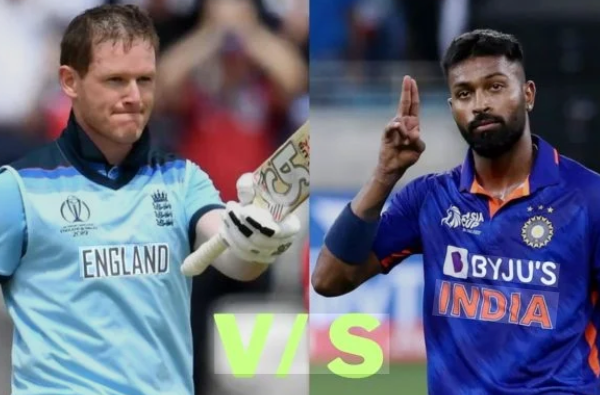
The rivalry between the England Cricket Team and the India National Cricket Team is one of the oldest and most prestigious in cricket history. Spanning across all formats, their contests have delivered iconic matches, legendary performances, and intense competition. From classic Test battles to modern limited-overs thrillers, this rivalry reflects tradition, evolution, and world-class cricketing excellence.
Recent: England vs India National Cricket
| Tournament | Venue | Date | England Score | India Score | Result | Series |
| ICC Men’s T20 World Cup 2026 – 2nd Semi-Final | Wankhede Stadium, Mumbai | 05 Mar 2026 | 246/7 (20 ov) | 253/7 (20 ov) | India won by 7 runs | T20 World Cup 2026 |
| India in England 2025 – 5th Test | The Oval, London | 31 Jul – 04 Aug 2025 | 247 & 367 | 224 & 396 | India won by 6 runs | India in England Test Series 2025 |
| India in England 2025 – 4th Test | Old Trafford, Manchester | 23-27 Jul 2025 | 669 | 358 & 425/4 | Match drawn | India in England Test Series 2025 |
| India in England 2025 – 3rd Test | Lord’s, London | 10-14 Jul 2025 | 387 & 192 | 387 & 170 | England won by 22 runs | India in England Test Series 2025 |
| India in England 2025 – 2nd Test | Edgbaston, Birmingham | 02-06 Jul 2025 | 407 & 271 | 587 & 427/6d | India won by 336 runs | India in England Test Series 2025 |
| India in England 2025 – 1st Test | Headingley, Leeds | 20-24 Jun 2025 | 465 & 373/5 | 471 & 364 | England won by 5 wickets | India in England Test Series 2025 |
| England in India 2025 – 3rd ODI | India (Bilateral) | 12 Feb 2025 | 214 (34.2 ov) | 356 (50 ov) | India won by 142 runs | England in India ODI Series 2025 |
| England in India 2025 – 2nd ODI | India (Bilateral) | 09 Feb 2025 | 304 (49.5 ov) | 308/6 (44.3 ov) | India won by 4 wickets | England in India ODI Series 2025 |
| England in India 2025 – 1st ODI | India (Bilateral) | 06 Feb 2025 | 248 (47.4 ov) | 251/6 (38.4 ov) | India won by 4 wickets | England in India ODI Series 2025 |
| England in India 2025 – 5th T20I | India (Bilateral) | 02 Feb 2025 | – | 247/9 (20 ov) | Result: India (full scorecard confirms India strong finish) | England in India T20I Series 2025 |
| England in India 2025 – 4th T20I | India (Bilateral) | Jan/Feb 2025 | 166 | 181/9 | India won by 15 runs | England in India T20I Series 2025 |
| England in India 2025 – 3rd T20I | India (Bilateral) | Jan/Feb 2025 | 171/9 | 145/9 | England won by 26 runs | England in India T20I Series 2025 |
| England in India 2025 – 2nd T20I | India (Bilateral) | Jan/Feb 2025 | 165/9 | 166/8 | India won by 2 wickets | England in India T20I Series 2025 |
| England in India 2025 – 1st T20I | India (Bilateral) | Jan/Feb 2025 | 132 | 133/3 | India won by 7 wickets | England in India T20I Series 2025 |
Head-to-Head Record Table (Overall Across All Formats)
| Format | Matches Played | India Wins | England Wins | Draws / Ties / No Result | India Win % (approx.) |
| Test | 141 | 37 | 53 | 51 Draws | 26% |
| ODI | 110 | 61 | 44 | 3 No Result + 2 Ties | 55% |
| T20I | 29 | 17 | 12 | 0 | 59% |
| Overall | ~280 | 115 | 109 | 51 Draws + others | 41% (India edge) |
Format-wise Team Performance Comparison Table
| Format | India Batting Strength (Avg 1st Innings) | England Batting Strength (Avg 1st Innings) | India Bowling Edge | England Bowling Edge | Key Trend |
| Test | Strong at home (often 400+) | Resilient away, big totals in England | Spin attack rules in India | Seam & swing in England | High-draw rate, England slightly ahead historically |
| ODI | Explosive middle order, chase masters | Aggressive top order | Death bowling & spin | Pace variety | India clearly superior in recent years |
| T20I | Highest strike-rate power hitters | Big-hitting depth | Mystery spin & yorkers | Death-over specialists | India leads with flair & consistency |
Top Players Performance Table
| Player | Country | Matches | Runs | Average | Highest Score | Format Highlights |
| Virat Kohli | IND | 87+ | 4,500+ | ~55+ | 254* | Dominant across all formats |
| Sachin Tendulkar | IND | 69+ | 4,000+ | ~58 | 193 | ODI & Test legend |
| Joe Root | ENG | 50+ | 3,500+ | ~52 | 218 | Modern Test run-machine |
| Alastair Cook | ENG | 57 | 3,000+ | ~48 | 294 | Gritty opener |
| Sunil Gavaskar | IND | 38 | 2,483 | – | – | Test pioneer |
Top Wicket-Takers Table
| Player | Country | Matches | Wickets | Average | Best Figures | Format Highlights |
| James Anderson | ENG | 39+ | 139+ | ~28 | 7/42 | Swing king in Tests |
| Ravichandran Ashwin | IND | 20+ | 95+ | ~25 | 6/47 | Spin maestro |
| Anil Kumble | IND | 19+ | 92+ | ~30 | 10/74 | Legendary wrist-spin |
| Kapil Dev | IND | 27 | 80+ | – | – | All-round pioneer |
| Ravindra Jadeja | IND | Recent | 70+ | ~24 | – | Current all-round threat |
ODI Cricket Battles and Tactical Gameplay
ODI encounters between England and India have become increasingly competitive, especially in the modern era. England’s aggressive “white-ball revolution” has transformed their approach, focusing on high scoring and fearless batting. India, meanwhile, combines stability with aggression, relying on a strong top order and experienced middle order.
The middle overs play a crucial role, where India often uses spin to control the game, while England focuses on maintaining a high run rate. Bowling strategies are key, with England relying on pace variations and India using a balanced attack.
These matches are often high-scoring and entertaining, with both teams capable of chasing big totals. Tactical decisions, such as powerplay utilization and death bowling, often determine the outcome.
| ODI Factor | England | India | Impact |
| Batting | Aggressive | Balanced | High scoring |
| Bowling | Pace + variations | Spin + pace | Key battle |
| Strategy | Attacking | Flexible | Tactical |
| Match Flow | Fast-paced | Controlled | Competitive |
T20I Encounters and Modern Cricket Style
In T20 Internationals, England and India showcase some of the most exciting cricket. Both teams are known for explosive batting lineups and innovative strategies. England’s power hitters and India’s dynamic batters make these matches thrilling.
England focuses on maximizing powerplay and maintaining momentum throughout the innings. India, on the other hand, balances aggression with calculated risks. Bowling in T20Is becomes crucial, especially in death overs where precision is required.
Fielding standards are exceptionally high for both teams, often influencing match outcomes. The fast-paced nature of T20 cricket ensures that momentum can shift quickly, keeping fans engaged.
These encounters highlight the evolution of cricket, where adaptability and innovation define success.
| T20I Aspect | England | India | Result |
| Batting | Explosive | Power-packed | High scoring |
| Bowling | Tactical | Balanced | Close games |
| Fielding | Excellent | Excellent | Crucial |
| Match Style | Aggressive | Fast-paced | Exciting |
Test Cricket Rivalry and Historic Series
Test cricket forms the foundation of the England vs India rivalry. Matches between these teams have produced some of the most memorable moments in cricket history. England’s home conditions, with swing and seam movement, have traditionally posed challenges for India.
India, however, has improved significantly in overseas conditions, achieving notable Test victories in England in recent years. Their strong pace attack and resilient batting have made them a formidable opponent.
Test series between these teams are often closely contested, with both sides displaying tactical depth and endurance. The longer format highlights patience, skill, and adaptability.
This rivalry in Test cricket continues to evolve, maintaining its importance in the traditional format of the game.
| Test Aspect | England | India | Impact |
| Conditions | Swing-friendly | Adaptable | Key factor |
| Batting | Traditional | Resilient | Balanced |
| Bowling | Seam-focused | Pace + spin | Strategic |
| Series Trend | Competitive | Improving | Tight contests |
ICC Tournaments and High-Pressure Matches
ICC tournaments have witnessed several high-stakes encounters between England and India. These matches often determine tournament progression and carry immense global attention.
India has consistently performed well in ICC events, using its experience and depth to handle pressure situations. England, particularly in recent years, has emerged as a dominant force in white-ball cricket, winning major tournaments.
The pressure of global competitions brings out intense performances from both sides. Players are required to deliver under scrutiny, making these matches highly competitive.
These encounters add another layer to the rivalry, combining skill with mental toughness.
| ICC Factor | England | India | Outcome |
| Experience | High | Very High | Balanced |
| Pressure Handling | Strong | Excellent | Close contests |
| Performance | Aggressive | Consistent | Competitive |
| Impact | Global | Global | High stakes |
Bowling Strength and Match Control
Bowling plays a crucial role in shaping matches between England and India. England relies on its pace attack, especially in home conditions, where swing and seam movement are effective. India, however, boasts a balanced bowling lineup with both quality spinners and fast bowlers.
In subcontinent conditions, spin becomes a key factor, giving India an advantage. England adapts by using variations and disciplined bowling strategies. Control during the middle overs is essential for both teams.
Death bowling is another critical aspect, where precision and execution can determine the result. Both teams have developed strategies to handle high-pressure situations effectively.
This balance between pace and spin creates an engaging contest in every match.
| Bowling Aspect | England | India | Impact |
| Pace | Very Strong | Strong | Early wickets |
| Spin | Moderate | Very Strong | Control |
| Variations | Effective | Tactical | Wickets |
| Death Bowling | Crucial | Crucial | Match deciding |
Batting Depth and Run-Scoring Patterns
Batting is one of the strongest aspects of both England and India. England’s lineup is known for its aggressive intent, aiming to dominate bowlers from the start. India, meanwhile, focuses on building innings and accelerating in key phases.
England’s approach often leads to high scores, while India’s method ensures consistency and stability. Both teams have strong middle orders capable of finishing matches effectively.
Run-scoring patterns vary depending on conditions, but both teams prioritize powerplay and death overs. The ability to adapt to different match situations is crucial for success.
These contrasting batting styles make their encounters exciting and unpredictable.
| Batting Factor | England | India | Result |
| Approach | Aggressive | Balanced | Strategic |
| Partnerships | Dynamic | Strong | Stability |
| Acceleration | Explosive | Controlled | Key phase |
| Depth | Strong | Very Strong | Advantage India |
Conclusion
The England Cricket Team and the India National Cricket Team share a rich and evolving rivalry that spans generations. From historic Test matches to modern white-ball clashes, their encounters continue to define high-quality cricket. With strong squads, evolving strategies, and intense competition, this rivalry remains one of the most respected and exciting in international cricket, delivering unforgettable moments for fans around the world.